Did I Miss My Chance? Bone Health, Osteopenia, and Osteoporosis After Menopause
Sometimes a patient has just received a bone-density scan showing osteopenia or osteoporosis. Sometimes she has had a fracture that seemed out of proportion to the fall that caused it. And sometimes she has simply realized—five, ten, or fifteen years after her final menstrual period—that no one ever explained what menopause could mean for her bones.
The question I often hear is:
“Did I miss my chance to do something about this?”
Earlier prevention is better. Bone loss often accelerates during the menopause transition, and we cannot always restore every bit of bone that has already been lost. But that does not mean it is too late.
There is still a great deal we can do to understand a woman’s current bone health, identify why she may be losing bone, preserve muscle and balance, and reduce her risk of future fractures.
Why does menopause affect bone health?
Bone may look solid and unchanging, but it is living tissue. Throughout life, old bone is continuously broken down and replaced with new bone through a process called remodeling.
Estrogen helps keep that process balanced. As estrogen declines during menopause, bone breakdown begins to outpace bone formation. Bone loss is often fastest during the years surrounding the final menstrual period and then continues more gradually afterward.
For most women, this happens silently.
Osteopenia and osteoporosis do not usually cause pain or other symptoms. A woman can feel healthy, exercise regularly, and have no idea that her bones are becoming less resilient. In some cases, the first sign of osteoporosis is a fracture.
That is why prevention and appropriate bone-density screening matter.
What do osteopenia and osteoporosis mean?
A DXA scan measures bone mineral density, typically at the hip and spine.
In postmenopausal women:
A T-score between –1.0 and –2.5 is categorized as osteopenia, also called low bone mass.
A T-score of –2.5 or below meets the bone-density definition of osteoporosis.
But the number does not tell the entire story.
Age, previous fractures, family history, medications, medical conditions, fall risk, smoking, alcohol use, body size, and the rate of bone loss all influence a woman’s likelihood of experiencing a fracture.
Two women with the same T-score may need very different plans.
It is also possible to have clinically significant osteoporosis without a T-score below –2.5. A low-trauma hip or vertebral fracture, for example, may establish the diagnosis based on fracture history alone.
Who may need a bone-density scan before age 65?
Routine osteoporosis screening generally begins at age 65, but younger women may need earlier testing when they have additional risk factors.
Earlier evaluation may be appropriate for women with:
menopause before age 45, particularly before age 40
surgical removal of both ovaries
prolonged estrogen deficiency
a previous low-trauma fracture
low body weight or significant weight loss
an eating disorder or prolonged low energy availability
long-term glucocorticoid use
rheumatoid arthritis, celiac disease, thyroid excess, or hyperparathyroidism
cancer treatments that affect ovarian function or bone
a strong family history of osteoporosis or hip fracture
recurrent falls or impaired mobility
anyone who wants to know their baseline bone density to help make a decision about the pros and cons of hormone therapy for themselves
Age 65 is a screening benchmark. It is not a reason to ignore bone health before then.
A low bone-density result deserves a complete evaluation
When a DXA scan is lower than expected, I want to understand how high is this patient’s fracture risk, and why is she losing bone?
Menopause and loss of estrogen may be the major contributor, but it is not always the only one. Depending on the history, evaluation may include testing for vitamin D deficiency, thyroid or parathyroid disease, kidney or liver disease, celiac disease, medication effects, or other secondary causes of bone loss. A DXA report is useful, but it is not a complete assessment of bone-health.
Is it too late to improve bone health?
Usually, no.
We cannot promise to restore bone to where it was at age 30. But even years after menopause, treatment can reduce fracture risk and help preserve strength, mobility, and independence.
A personalized plan may include:
progressive resistance and weight-bearing exercise
adequate protein and overall nutrition
sufficient calcium, preferably through food when possible
correcting vitamin D deficiency
balance training and fall prevention
treating medical conditions that contribute to bone loss
reviewing medications that increase fracture risk
hormone therapy or osteoporosis medication when indicated
For women at high or very high fracture risk, lifestyle changes alone may not be enough. Medications can meaningfully reduce the risk of hip, spine, and other osteoporotic fractures.
The right treatment depends on the woman’s fracture history, bone density, age, medical conditions, preferences, and overall level of risk.
Exercise means more than walking
Walking is excellent for cardiovascular health, mood, mobility, and general well-being. But walking alone has not consistently been shown to meaningfully improve bone density.
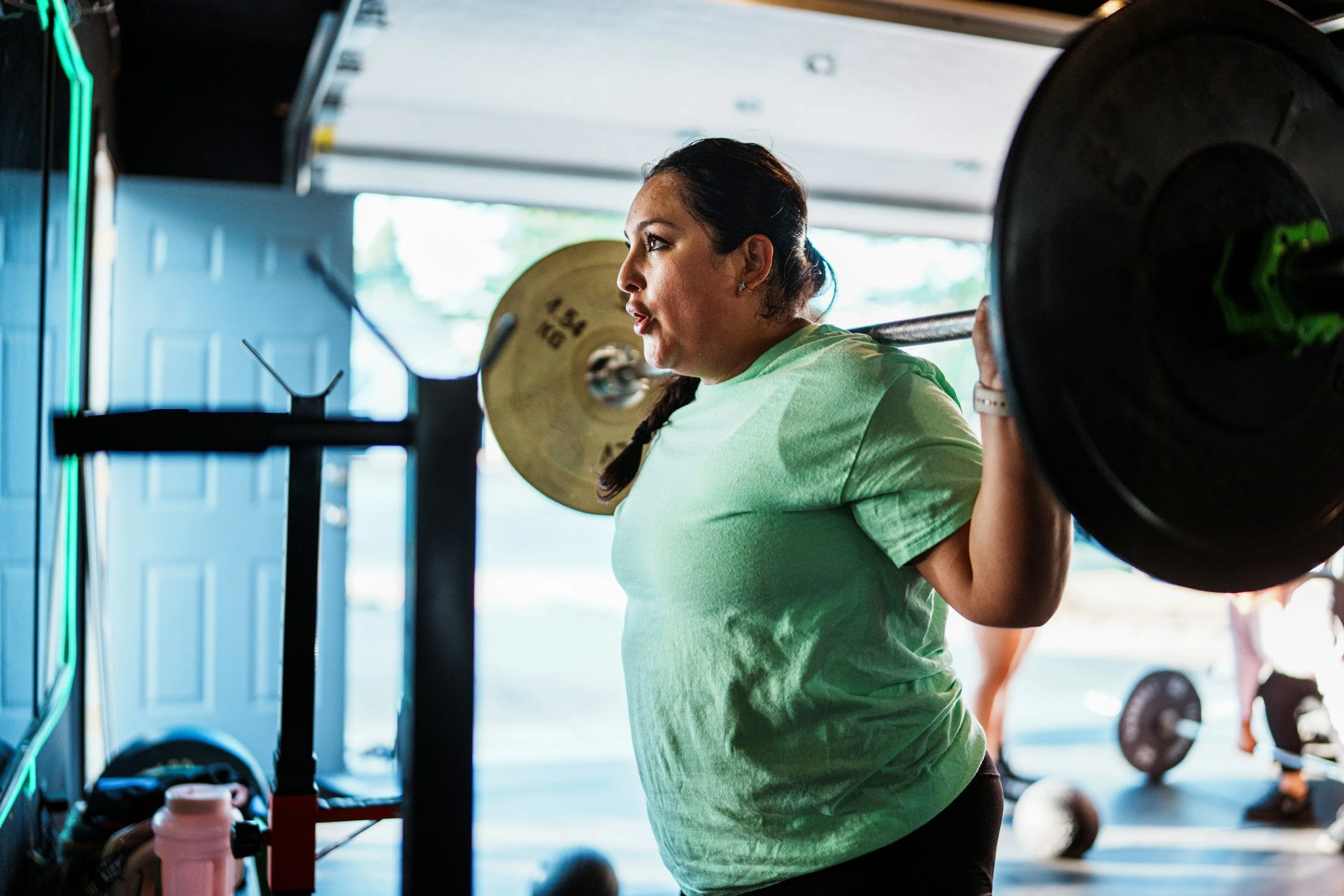
For bone health, a more complete exercise plan usually includes progressive resistance training—exercise that becomes appropriately more challenging over time. This may involve free weights, machines, resistance bands, or body-weight movements, depending on the individual.
The LIFTMOR randomized trial included 101 otherwise healthy postmenopausal women over age 58 with osteopenia or osteoporosis and found that eight months of twice-weekly, supervised high-intensity resistance and impact training, using exercises such as deadlifts, squats, overhead presses, and jumping chin-ups, improved lumbar-spine and femoral-neck bone density, strength, and physical function compared with a low-intensity home exercise program, with high adherence and only one minor adverse event. While this is incredibly encouraging, it’s important to start any new exercise program under professional supervision to avoid injury, as was the case in this study.
Balance training matters as well. Strengthening bone is important, but preventing the fall that causes a fracture may be equally important.
What about walking with a weighted vest?
Weighted vests have become increasingly popular, and they may make walking more physically demanding. They may also provide cardiovascular or muscular benefits for some women.
However, we do not currently have strong evidence that simply walking in a weighted vest meaningfully improves bone density.
A weighted vest may be useful as one way to add resistance to exercises such as squats, step-ups, or lunges. But I would not recommend it as a substitute for progressive resistance training, appropriate impact exercise, or medication when medication is indicated.
The fundamentals still matter most.
Protein, calcium, and vitamin D all matter
Calcium is important, but bone is not made of calcium alone.
Adequate protein supports muscle, physical function, and the structural matrix of bone. In midlife and beyond, preserving muscle becomes especially important because muscle strength, balance, fall risk, and bone health are closely connected.
Calcium needs should be met through food when possible, with supplementation used to fill a true gap rather than automatically taking a large dose. More is not necessarily better.
Vitamin D helps the body absorb calcium and supports normal bone metabolism. But vitamin D is not a stand-alone treatment for osteoporosis. Taking high doses cannot compensate for inadequate resistance training, poor nutrition, untreated bone loss, or a need for medication.
Where does hormone therapy fit?
Systemic hormone therapy helps prevent postmenopausal bone loss and reduces fracture risk while it is being used.
In fact, prevention of postmenopausal osteoporosis is an FDA-approved indication for many systemic estrogen products. This can be particularly relevant for a woman with osteopenia who may consider hormone therapy for bone health and/or other indications.
Hormone therapy is not generally considered first-line treatment for established osteoporosis. The Endocrine Society recommends osteoporosis-specific medications as initial treatment for most postmenopausal women at high fracture risk. However, hormone therapy isn’t contraindicated in the setting of osteoporosis and can also be considered part of a comprehensive treatment plan for bone support. It’s understandable that many women are interested in estrogen for bone health based on the findings in the Women’s Health Initiative study that fracture risk was 30% lower in women on hormone therapy versus placebo, regardless of their baseline fracture risk.
Starting hormone therapy much later, solely because a bone-density scan now shows osteoporosis, is also a different decision from initiating it near menopause. Age, time since menopause, cardiovascular and clotting risk, breast history, symptoms, and alternative treatments all need to be considered. However, it’s worth having the discussion with a menopause specialist if hormone therapy can be part of the ongoing bone support plan of care.
What about Osteoboost and vibration plates?
Whole-body vibration plates
Traditional vibration plates have been studied for bone density, muscle function, and balance. Some small studies have reported benefits, but the overall evidence remains inconsistent and generally low quality.
At this point, I would not recommend a vibration plate as a reliable treatment for osteopenia or osteoporosis.
It may help some women with balance, muscle activation, or exercise participation, particularly when more demanding activity is difficult. But it should not be viewed as a substitute for resistance training, adequate nutrition, fall prevention, or medication when indicated.
Osteoboost
Osteoboost is a newer prescription wearable device that delivers targeted vibration to the lumbar spine and hips. It has received FDA authorization for postmenopausal women with osteopenia.
The early evidence is interesting but still limited. Postmenopausal women who used the device consistently over the course of a year lost significantly less bone density than those who used a placebo device.
That suggests Osteoboost may help slow bone loss for some women. But we do not yet have evidence that it prevents fractures, and the current data largely come from one modest-sized study. I think of Osteoboost as a promising adjunct, not a replacement for exercise, nutrition, hormone therapy when appropriate, or osteoporosis medication when indicated. Though it’s FDA authorized it is not covered by insurance at this time and as of this writing the price on the Osteoboost website is listed at $995.
Bone health is really about independence
I care about the T-score, but I care even more about what we are trying to prevent.
Hip and vertebral fractures can lead to chronic pain, reduced mobility, fear of falling, and loss of independence. That is why bone health is closely tied to muscle, balance, vision, nutrition, cardiovascular fitness, and confidence in movement.
The goal is not simply to improve a number on a scan. It is to help a woman remain strong enough to travel, exercise, lift groceries, get up from the floor, play with grandchildren, and continue living life on her own terms.
Look forward, not backward
It is understandable to feel frustrated if no one discussed bone health when you entered menopause. Perhaps an earlier conversation would have changed your exercise plan, led to earlier screening, or influenced your decision about hormone therapy.
What matters now is understanding your current bone health, identifying your personal risk factors, and deciding what can be done today.
That may mean a more intentional strength program.
It may mean a nutrition change.
It may mean hormone therapy.
It may mean an osteoporosis medication.
It may mean a deeper evaluation for another medical condition.
Often, it is a combination.
You may not be able to return to the beginning of menopause and make different choices. But you can still protect the years ahead.